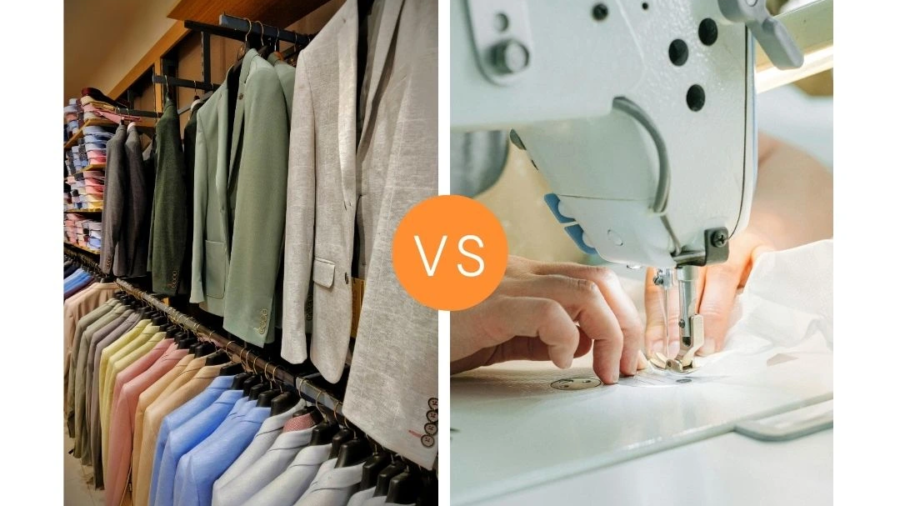
When businesses plan to invest in uniforms, one major decision comes up early: Should you choose tailor-made uniforms or ready-made uniforms?
While both options serve the same basic purpose—creating consistency and professionalism—the long-term impact on comfort, branding, and cost can vary significantly.
In this guide, we’ll break down the differences between tailor-made and ready-made uniforms so you can make the right decision for your company.
Tailor-Made Uniform vs Ready-Made Uniform: Quick Comparison
| Feature | Tailor-Made Uniform | Ready-Made Uniform |
| Fit | Custom fit based on company sizing | Standard size chart |
| Branding | Full customization (logos, colors, trims) | Limited customization |
| Fabric Choice | Selected based on work environment | Pre-decided fabric |
| Durability | Designed for specific job conditions | General-use durability |
| Upfront Cost | Higher initial investment | Lower initial cost |
| Long-Term Value | Better ROI over time | May require frequent replacement |
| Production Time | 2–4 weeks depending on order | Immediate or quick dispatch |
| Best For | Large teams, strong branding needs | Small teams, urgent orders |
What Is a Ready-Made Uniform?
Ready-made uniforms are pre-designed garments produced in bulk with standard sizes. These are usually kept in stock and can be delivered quickly.
Advantages of Ready-Made Uniforms:
✔ Quick availability
✔ Lower upfront cost
✔ Easy replacement
✔ Suitable for small or urgent orders
This option works well for businesses that need uniforms immediately or operate with limited customization requirements.
However, ready-made uniforms may not always align perfectly with brand identity, job-specific needs, or employee comfort.
What Is a Tailor-Made Uniform?
Tailor-made uniforms are custom-designed garments created specifically for your company. These uniforms are made based on your branding guidelines, fabric preferences, sizing requirements, and functional needs.
Advantages of Tailor-Made Uniforms:
✔ Custom branding (logos, colors, trims)
✔ Better fit and comfort
✔ Role-specific design
✔ Higher durability when designed correctly
✔ Stronger brand identity
Companies working with experienced uniform manufacturers in India often prefer tailor-made solutions because they allow better alignment with operational needs.
Difference Between Tailor-Made & Ready-Made Uniforms
1. Fit and Comfort
One of the biggest differences between the two is fit.
Ready-made uniforms follow standard sizing charts, which may not suit all body types. This often results in uniforms that are too tight, too loose, or uncomfortable during long shifts.
Tailor-made uniforms, on the other hand, can be adjusted for:
- Different body types
- Specific department roles
- Climate conditions
- Job movements (bending, lifting, standing long hours)
For industries requiring a high-performance uniform for workers, proper fit is essential for both safety and productivity.
2. Branding and Professional Image
Uniforms represent your brand visually every day.
Ready-made uniforms may offer limited color options and logo placement flexibility. This can lead to a generic appearance that doesn’t reflect your brand identity.
Tailor-made uniforms allow:
- Exact brand color matching
- Embroidered logos
- Custom trims and panels
- Department-specific variations
If brand consistency is important, custom uniforms usually deliver stronger visual impact.
3. Functionality and Role-Specific Needs
Different roles require different functionality.
For example:
- Industrial workers may need reinforced seams and heavy-duty fabric.
- Hospitality staff may need breathable fabrics and stain resistance.
- Corporate employees may prioritize comfort and appearance.
A ready-made solution may not account for all these requirements.
Custom uniforms allow businesses to avoid the common mistakes discussed in our guide on examples for bad uniform design, such as poor fabric selection, lack of role differentiation, or uncomfortable fits.
4. Durability and Longevity
While ready-made uniforms may seem cheaper initially, they often wear out faster because they’re not designed specifically for your work conditions.
Tailor-made uniforms, when created with proper fabric and stitching, typically:
- Last longer
- Withstand frequent washing
- Resist tearing and fading
- Offer better value over time
For physically demanding industries, durability is not optional—it’s essential.
5. Cost Considerations
Cost is often the deciding factor.
Ready-Made Uniform Costs:
- Lower upfront price
- Faster purchasing cycle
- Good for small teams
Tailor-Made Uniform Costs:
- Slightly higher initial investment
- Longer production timeline
- Better long-term ROI
Businesses often assume custom uniforms are too expensive. However, with smart planning, you can reduce costs for custom uniform orders by:
- Standardizing fabrics across departments
- Ordering in bulk
- Choosing versatile base designs
- Working with experienced manufacturers
In many cases, tailor-made uniforms become more economical over time due to fewer replacements and better durability.
6. Scalability and Inventory Management
For growing businesses, scalability matters.
Ready-made uniforms are easier to reorder in small quantities. However, if your workforce expands rapidly, stock sizes may not always be available.
Custom uniforms require planning but allow better inventory control and consistency across locations.
Large organizations often choose tailor-made uniforms to maintain uniformity across multiple branches.
Which One Should You Choose?
The answer depends on your business goals.
Choose Ready-Made Uniforms If:
- You need urgent delivery
- Your team is small
- Branding is not a major priority
- Budget is extremely limited
Choose Tailor-Made Uniforms If:
- You want strong brand identity
- Your employees perform specialized tasks
- Comfort and durability are priorities
- You’re planning long-term scaling
For industries like manufacturing, construction, and logistics—where a high-performance industrial uniform is critical—custom uniforms often provide better safety and comfort.
Final Thoughts
There is no one-size-fits-all answer. Both tailor-made and ready-made uniforms have their place in business operations.
However, if you’re looking for long-term value, brand consistency, and better employee satisfaction, tailor-made uniforms generally offer a stronger return on investment.
Working with experienced uniform manufacturers in India ensures that your uniforms are designed not just for appearance—but for performance, durability, and practicality.
Before making a decision, evaluate your:
- Work environment
- Employee comfort needs
- Brand identity goals
- Budget and scaling plans
The right uniform strategy isn’t just about clothing—it’s about creating a professional, comfortable, and confident workforce.